
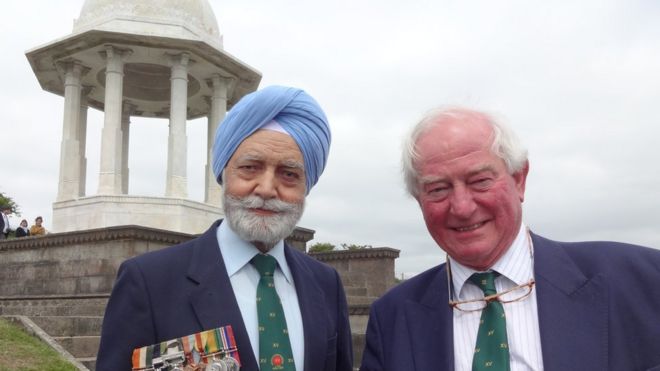
 Jaimal Singh (left) and Ian Henderson (right) had grandfathers who fought together in WWI and fathers who served together in WWII - the pair annually visit the Indian war memorial at Brighton
It was an Anglo-Indian friendship formed in the heat of battle, and it has lasted for three generations to this day.
Manta Singh, from Jalandhar in India, was serving in the 15th Ludhiana Sikhs during the battle of Neuve Chapelle in 1915. It was one of the bloodiest battles of World War One, described by one soldier as "a foretaste of hell".
When his friend, Capt George Henderson, was injured in fierce fighting, Subedar (Lieutenant) Singh found a wheelbarrow to carry him to safety under constant firing.
In doing so the Indian soldier was shot in the leg and died later in hospital in the UK from a gangrene infection.
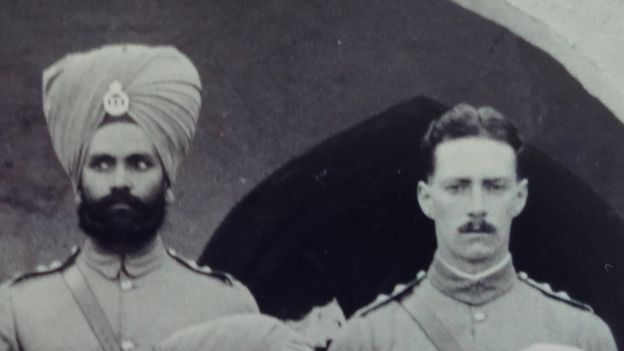
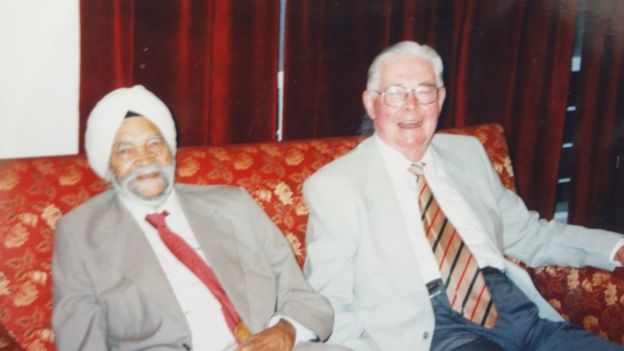
A few years after the war, Capt Henderson travelled to Punjab to meet Manta Singh's son, Assa Singh, ensuring that he was given a job in the same British Indian army regiment as his father.
Over the years Assa Singh and Capt Henderson's son Robert become the best of friends and served together in north Africa during World War Two.
When that conflict ended Assa Singh moved to Britain - with Robert's help - and now the third generation of their families are friends.
Jaimal Singh, the grandson of Manta Singh, and Ian Henderson, the grandson of George, go to Brighton every year to lay a wreath at a memorial to Indian soldiers who died fighting for Britain.
The story of Manta Singh and his descendants is one of several case studies unearthed by British-Indian journalist Shrabani Basu in her new book For King and Another Country.
She has been able to reveal acts of bravery by Indian troops - previously not in the public domain - through painstaking research at the British Library in central London.
"This war was not of their making," Ms Basu says. "The Indian soldiers travelled thousands of miles to fight someone else's war.
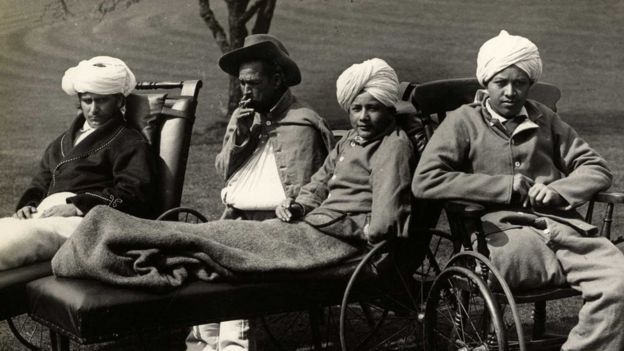
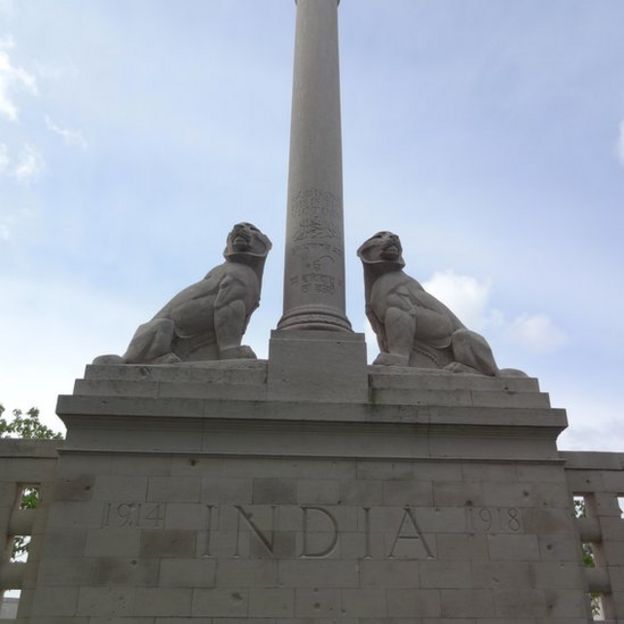
"When they arrived in Europe they couldn't tell why the French were fighting the Germans. They couldn't see the difference between them. They were confused as to why the white people were fighting white people."
The author says it is for good reason these men are often called India's forgotten soldiers.

Some of India's forgotten WW1 heroes
Gabar Singh Negi VC
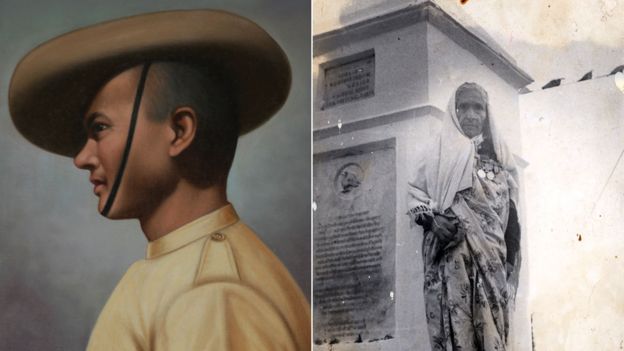
He died aged 22 in the battle of Neuve Chapelle - one of the biggest battles that the Indians fought as a united corps. Gabar's wife, a 13-year-old child bride, wore his Victoria Cross on her sari all her life until her death in 1981.
Indra Lal "Laddie" Roy DFC
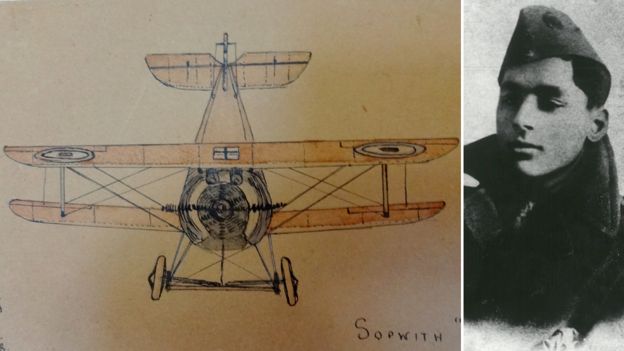
Believed to be the first - and only - Indian flying ace of WW1, he accounted for nine enemy aircraft in 13 days. Shot down in December 1917, he was mistaken for dead by the French and had to free himself from a hospital morgue before being transferred back to England. He was shot down and killed only four months before the end of the war while flying a daring sortie over the trenches in Carvin in France.
Darwan Singh Negi VC
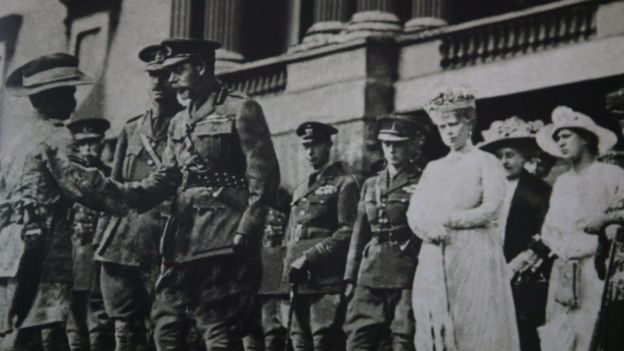
One of the first surviving Indian soldiers to win a Victoria Cross in WW1, he received his award from King George V in France for his role in the defence of Festubert. Asked by the king what he wanted in reward, he asked for a school in the area where he lived. The British-built Darwan Singh War Memorial School has been expanded and still stands in what is now the Indian state of Uttarakhand.
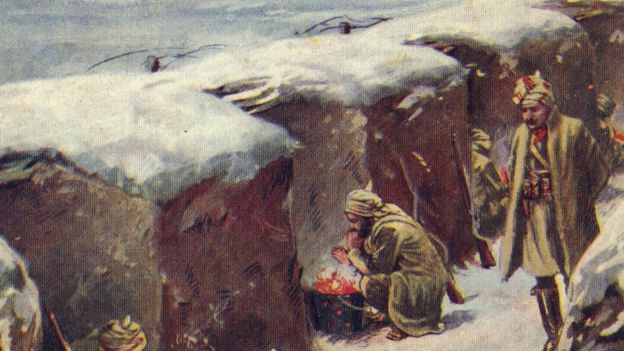
"The overriding image of WW1 is a Tommy in his helmet - nobody knows that standing alongside him in the cold and muddy trenches in France and Flanders were men in turbans - they were Sikhs, they were Pathans, they were Gurkhas, Dogras, Rajasthanis, they were Garhwalis from the foothills of the Himalayas.
"More than 1.5 million men crossed the seas from India and of these 72,000 died.
"I wanted people to know about these soldiers. I wanted their personal stories. What did they think when they came to a cold, damp alien land, whose language they did not fully understand?"
The papers that Ms Basu went through at the British Library not only tell the stories of countless acts of gallantry by Indian soldiers, they also reveal the forgotten suffering endured by thousands of ordinary Indian soldiers.
Out of the thousands of case studies she examined, she says that of Sukha - a trench cleaner and sweeper from what is now the state of Uttar Pradesh - is one of the most compelling.
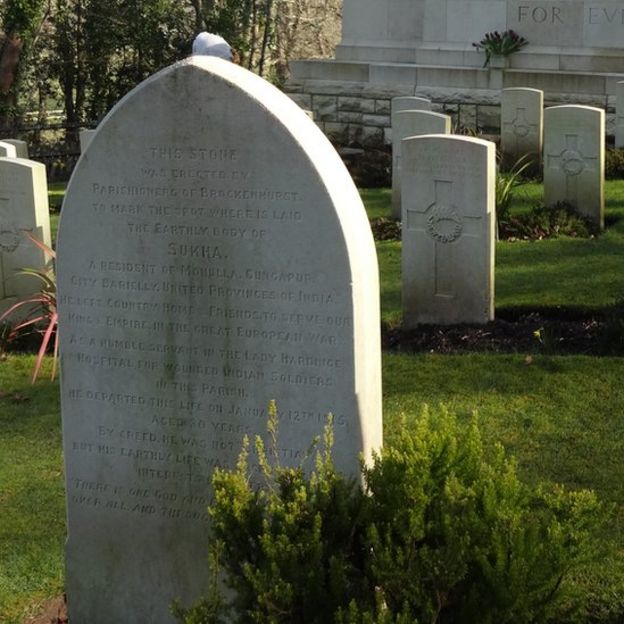
The cold in the trenches during the winter of 1915 was too much for him and he died of pneumonia in hospital in the southern English village of Brockenhurst.
"But the Hindus in England would not cremate him because he was from a low caste - an untouchable - who was beneath their status," Ms Basu says.
"Likewise the Muslims wouldn't bury him because he was not a Muslim. Sukha was in no man's land in a foreign country rejected by his own compatriots on caste or religious grounds."
In the end the vicar of local church in Brockenhurst stepped forward to offer Sukha a burial place.
"He said that Sukha died for us, we will bury him," Ms Basu said. "Local parishioners raised money for a headstone and he now lies in a beautiful grave in a beautiful part of the English countryside."


No comments:
Post a Comment