
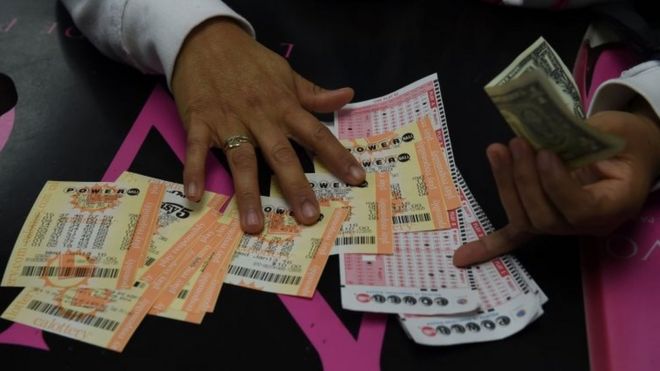
There are at least three winning tickets in the US for the record $1.6bn (£1.1bn) lottery jackpot, officials have said.
The winning tickets in the Powerball jackpot were sold in California, Tennessee and Florida.
The previous draw was the 19th without a grand prize winner, which requires all six numbers to match.
Officials said it would take several hours to know if there are any other winning tickets.
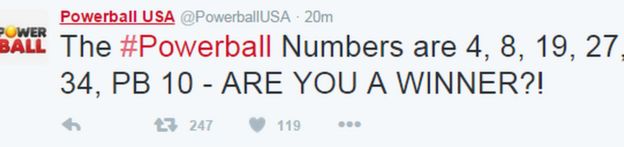 Powerball USA
The identity of the winners was not yet known.
Thousands of people queued up outside shops across the US on Wednesday, hoping to defy the odds of 292.2 million to one.
The winning ticket in California was sold at a 7-Eleven store in Chino Hills, a suburb east of Los Angeles, California Lottery tweeted. Television pictures showed a cheering crowd gathered at the shop after the result was announced.
The winners will share a prize of $1.586 billion. They can collect their winnings in annual payments over 29 years, or opt to share a lump-sum payment of $930m.
The government would also share in the big prize, however, levying a 39.6% federal income tax on the winners, plus any taxes that the winners' home states may impose.
Follow the money
Is this really the biggest?
The current $1.5bn jackpot is a whopping $600m more than previous record holder. A March 2012 drawing of the US lottery Mega Millions had a $656m prize shared by three winners. In Europe, the largest lottery prizes have been lower than in the US but the jackpots are given as a lump sum rather than as an annuity and most countries do not tax the winnings. The biggest European prize was won in July 2011 by a ticketholder in the UK. That person took home a lump sum of $260m (£161.7m).
Where do Powerball profits go?
Back to the participating states. For example, New Jersey has sold more than $50m in tickets during this current jackpot craze and lottery officials said about $20m of that would return to the state. More than 15 states use the profits to fund education. However, schools aren't expecting a huge windfall. California officials estimate the lottery money accounts for about 1% of the state's education budget. In Wisconsin, the profits go towards lowering property taxes.
How did the jackpot get so big?
No one has won the draw since 4 November. The prize is based on ticket sales so high jackpots usually create a snowball effect until a winning combination is picked. A new format introduced in October makes these massive jackpots more likely, meaning more records could be broken in future.
Six of the 50 US states do not participate in the lottery, so some residents drive hours to buy tickets.
Alabama, Mississippi and Utah cite religious reasons, while Alaska has said it would not be economical in such a sparsely populated state.
In Hawaii, proposed legislation to start it fails consistently and in Nevada the lottery is rejected because the state's world famous casinos prefer not to have competition.


No comments:
Post a Comment